
Software Supply Chain Security with an SBOM — Know What Your Application Is Made Of
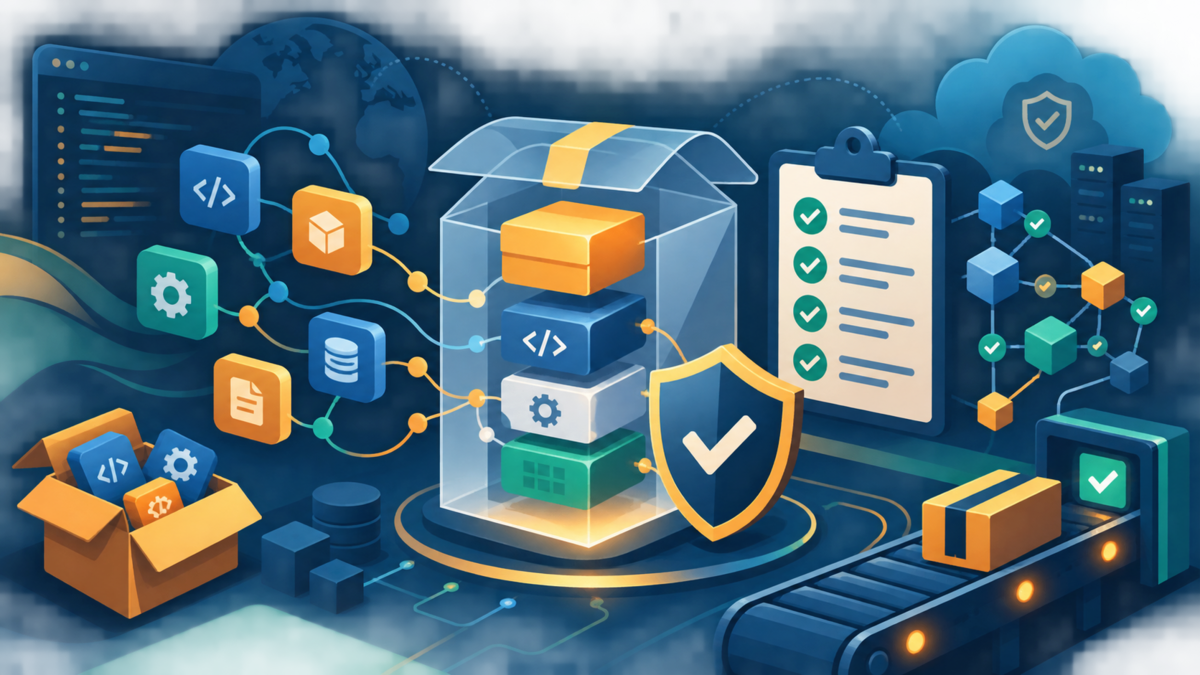
Installing a package often feels as ordinary as picking an ingredient from a supermarket shelf. One command brings thousands of lines of code into an application, and we continue building without meeting the people who wrote them or inspecting every file. The convenience is valuable, but it also means our software is assembled from a supply chain we may barely see.
Software supply chain security is the practice of protecting that chain: source code, third-party libraries, build tools, package registries, CI/CD workflows, and the artifacts eventually deployed. A Software Bill of Materials, usually shortened to SBOM, gives us an inventory of those ingredients. It does not magically secure an application, but it turns an invisible dependency tree into information a team can inspect, compare, and act on.
The Supply Chain Is Bigger Than the Dependency List
Developers commonly think of dependencies as entries in package-lock.json, composer.lock, or another lockfile. Those files are important, yet the supply chain begins earlier and ends later. It includes the maintainer account publishing a package, the registry serving it, the action used during a build, the base image behind a container, and the server signing a release.
An attacker does not always need to break the front door of your application. Compromising a trusted tool can provide a side entrance into every project that consumes it. Typosquatting packages imitate familiar names. Stolen maintainer credentials can turn a legitimate update into malware. A mutable container tag may quietly point to different bytes tomorrow. The dangerous part is trust moving across boundaries without enough verification.
Imagine a small restaurant. Food safety is not limited to the cook washing their hands; it also depends on suppliers, cold storage, delivery conditions, and knowing which meals used a recalled ingredient. Software works similarly. Secure code can still inherit risk from an upstream component, while a clear inventory makes tracing exposure much faster.
What an SBOM Actually Contains
An SBOM is a machine-readable record describing the components inside a software artifact. Common formats include SPDX and CycloneDX. A useful document can record package names, versions, suppliers, licenses, cryptographic hashes, dependency relationships, and Package URLs. It may describe an application repository, a container image, firmware, or a released binary.
The distinction between a lockfile and an SBOM matters. A lockfile primarily helps a package manager reproduce an installation. An SBOM is designed to communicate composition across tools and organizations. It can include operating-system packages and generated artifacts that a language-specific lockfile misses. The two complement each other rather than compete.
An SBOM is also a snapshot, not a live security verdict. Seeing openssl or a JavaScript library in the document does not say whether it is exploitable in your context. It tells you that the component is present, which version was observed, and often how it relates to the rest of the application. That evidence supports the next investigation.
Generate an SBOM for the Artifact You Ship
Several open-source tools can generate an SBOM, including Syft, Trivy, and language-specific plugins. The most useful scan targets the artifact delivered to production, because a repository scan may not see packages added by a container base image or build process. The following example creates a CycloneDX JSON document from a local container image with Syft:
syft myapp:1.4.0 -o cyclonedx-json=sbom.cdx.json
sha256sum sbom.cdx.json > sbom.cdx.json.sha256
You can inspect the result and keep it beside the corresponding release artifact. Give every release a fixed version or digest instead of relying only on a tag such as latest. The checksum helps detect accidental changes to the document, while the artifact digest creates a precise connection between what was scanned and what was deployed.
Generation should be automated in CI/CD after the final build, not performed from memory before an audit. Store the SBOM as a pipeline artifact or attach it to a release. Avoid publishing it blindly if it exposes private package names or internal architecture; access should match the sensitivity of the software and the needs of customers or operators.
Scan the Inventory, Then Investigate the Findings
Once an SBOM exists, a vulnerability scanner can compare its components with advisory databases. Grype, for example, accepts an SBOM directly:
grype sbom:sbom.cdx.json --only-fixed
The output is a starting queue, not an automatic verdict. Vulnerability data can contain false positives, incomplete version mapping, or issues that are unreachable in your application. Conversely, “no vulnerabilities found” does not prove safety; databases lag behind discoveries, and supply chain attacks may involve malicious behavior without a published CVE.
Prioritize findings by combining severity with exposure, exploitability, and business impact. A critical flaw in an unused build-time component may deserve a different response from a high-severity flaw reachable from the public internet. Document why a finding is accepted, mitigated, or scheduled. This preserves context so the same alert does not restart the same debate next week.
Reduce Trust Before Adding More Scanners
Inventory and scanning are useful, but prevention begins with reducing unnecessary trust. Pin dependencies and CI actions to immutable versions or commit hashes. Require review for lockfile changes. Protect registry and source-control accounts with strong authentication. Limit CI tokens to the permissions and lifetime they actually need, and keep signing keys away from ordinary build logs.
Minimize the dependency tree as well. Every package is another relationship to monitor, much like adding another keyholder to a building. A small utility with dozens of transitive dependencies may cost more security attention than writing ten clear lines locally. This does not mean “never use libraries”; it means the convenience should justify the trust introduced.
Reproducible builds, provenance attestations, signed releases, and isolated build runners provide stronger assurance as a project matures. Start with controls your team can sustain. A simple review rule consistently followed is more valuable than an elaborate framework that everyone bypasses during a hurried release.
Build a Practical Response Workflow
An inventory becomes valuable during an incident. When a new vulnerability or compromised package is announced, search all stored SBOMs for the affected component and version. Identify which products and environments contain it, determine whether the vulnerable feature is used, then patch, mitigate, or rebuild. Without an inventory, this process becomes a message sent to every developer asking, “Do we use this somewhere?”
Assign ownership before the alarm rings. Decide who reviews dependency alerts, how urgent findings are escalated, how exceptions expire, and how rebuilt artifacts reach production. Keep previous SBOMs long enough to investigate historical exposure. If customers depend on your software, define a safe method for sharing relevant composition and remediation information with them.
Test the workflow with a harmless exercise. Choose a known outdated package in a staging image, locate it through the SBOM, create a ticket, update it, rebuild, and confirm that the next SBOM no longer contains the old version. A fire drill reveals missing ownership and broken automation while there is no real fire.
A Small Starting Checklist
For a small application, begin with five repeatable steps: generate an SBOM from each release artifact; retain it with the artifact digest; scan it against current advisories; review dependency changes as carefully as application code; and rehearse the response to a vulnerable component. Add signing and provenance when the foundation works reliably.
Measure useful outcomes rather than document volume. Can the team answer which deployed releases contain a named package? How long does that answer take? Are critical dependencies owned and updated? Can a release be rebuilt from reviewed inputs? These questions reveal whether the program improves decisions instead of merely producing another JSON file for an archive.
Conclusion: Know the Ingredients Before the Recall
Modern software will continue to depend on code written and distributed by others. The goal is not to eliminate that collaboration, but to make trust visible and deliberate. An SBOM provides the ingredient list; secure accounts, pinned inputs, careful reviews, scanning, and a tested response process provide the kitchen discipline around it.
Start with one application and one release pipeline. Generate its SBOM, connect it to the exact artifact, and practice answering a simple question about a dependency. If you already use SBOM tooling or have faced a supply chain incident, share what worked in the comments so other readers can strengthen their own process.