
AI and Ethics: The Limits of Technology — When Should Code Stop?
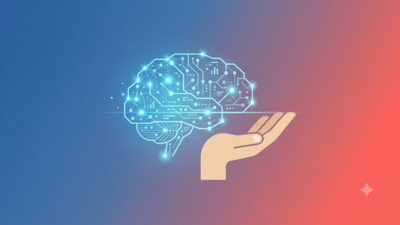
AI and Ethics: The Limits of Technology — When Should Code Stop?
The first time I saw an AI model produce a human face that was almost indistinguishable from a real photo, I had mixed feelings: awe, confusion, and a little goosebumps. In a way, this technology is like modern magic that opens doors for small creators like me. On the other hand, there is a nagging question: to what extent should we allow code to replace human decisions?
AI is no longer just a tool behind the scenes. He now writes articles, draws illustrations, analyzes medical data, and even provides advice in making legal decisions. However, the more sophisticated a technology becomes, the more blurred the lines become between what can be done and what should be done. Ethics in the AI era is not a philosophical topic only discussed on campus; it is already a practical question facing anyone who presses the generate.
buttonSpeed that Obfuscates Direction
The development of AI feels like driving a sports car on an empty highway: the acceleration is exciting, but the brakes are often forgotten. Every week new models emerge with greater parameters, broader capabilities and state-of-the-art claims that are hard to follow. We are busy comparing benchmark scores, but rarely stop to ask: where is this technology actually going?
I often make an analogy of this with the kitchen. A sharp kitchen knife can speed up cooking, but in the wrong hands it can hurt. AI is a giant knife lent to millions of people at once. The problem is, many are given knives without ever being taught how to hold them safely. We are fascinated by speed, but forget that direction is more important than speed.
Quick reflection: If an AI can do something 1000 times faster than a human, does that mean it is 1000 times more correct?
Three Boundaries That Are Often Forgotten
From various discussions that I have read and experienced myself, there are three ethical boundaries that are most often violated without realizing it. Each is like the dark side of AI's abilities which are actually very useful.
1. Privacy and Consent
Large AI is trained with massive amounts of data. Some of that data comes from the public internet, but some of it may come from personal writing, photos of faces, conversations, or works of art that were never intended to be used as training material for the machine. This is where the privacy question arises: who has rights to the data that constitutes the AI's “learning experience”?
Imagine someone took a photo of your diary page, then created a chatbot that could perfectly imitate your writing style. Technically it is possible. Ethically, it was a subtle but deep violation. Because of this, I tend to prefer running AI models on my own home server when possible. Not because I'm anti-technology, but because I want to have more control over incoming and outgoing data.
2. Autonomy and Accountability
When AI makes medical recommendations, rejects a bank loan, or sorts job applications, who is responsible if something goes wrong? What is this model? The manufacturing company? The user? Or maybe, no one wants to admit it?
This is a dangerous fog zone. The more we delegate decisions to algorithms, the easier it is for humans to blame “the system” when things go wrong. In fact, AI basically has no intentions. It simply reflects the pattern of the given data. Accountability must still be in the hands of humans, not in the hands of logs who cannot be punished.
3. Bias and Fairness
AI is often considered neutral because it is a machine. In fact, AI is a reflection of human data, and human data is full of bias. From the language used, the images rehearsed, to the historical decisions recorded — everything can reinforce existing stereotypes.
For example, a facial recognition model trained primarily on specific skin data will more often incorrectly recognize faces outside that group. These technical errors are not just statistics; it could mean someone was wrongly identified, wrongly rejected, or even wrongly arrested. Technical neutrality does not automatically translate into social justice.
Ethics Isn't Just an Engineer's Job
We often think that AI ethics is the responsibility of the engineers in Silicon Valley who write the model code. In fact, every person who uses AI helps shape the ecosystem. A content creator who produces full articles from AI without transparency, a developer who creates deepfakes without permission, or a teacher who lets AI grade student work without verification — are all part of the chain of ethical choices.
That doesn't mean that using AI is always wrong. I myself use various AI tools to help with research, tidy up sentences, or explore ideas. The problem is when we use AI as a substitute for thinking, not as a companion to thinking. Like a calculator: it helps with calculations, but does not replace understanding mathematics.
Practical principles: Use AI to speed up processes, not to avoid responsibility for the end result.
Personal Reflection in the Corner of the Room
In the corner of the room, on a small table containing a used laptop which is now a home server, I often think about this. Why did I choose to do a local LLM? Why am I more comfortable keeping personal notes on a self-hosted app rather than a large platform? The answer is not always because of privacy in the sense of conspiracy, but more because of the awareness that data is a trace of oneself that cannot be easily erased.
When we send questions to a public API, we give away a little piece of ourselves each time. Over time, the pieces become highly detailed profiles. It is not impossible that AI in the future will be able to predict our habits, weaknesses, and even desires better than ourselves. The question is not "is technology cool?", but "are we comfortable living in a world where that profile is in the hands of corporations?"
That's why AI ethics for me is not just a matter of regulations and laws. It's also about small daily habits: what we send, what we trust, and when we choose to say no.
When Should Code Stop?
There is no universal answer about where the exact limits are. Each context has different nuances. But there are a few questions I think are worth asking before letting AI take a bigger role:
- Does this decision significantly affect other people's lives?
- Is there transparency about how the AI arrives at its conclusions?
- Is there anyone who can be questioned and held accountable?
- Is the data used permitted and protected?
- Do we still understand the process behind the results provided?
If some of the answers are no, then it might be time to pull the brakes. Not rejecting technology, but using technology more consciously.
Conclusion
AI is one of the most powerful tools humans have ever created. It can open access to knowledge, accelerate creativity, and solve complex problems in seconds. But great power always brings great responsibility. Without ethics, AI is no longer an assistive tool; it becomes the worst reflection of human habits accelerated a thousandfold.
As someone who learned from scratch about servers, code, and security, I realized that being a developer or user of technology means being a choice maker. Every feature we build, every API we call, and every data we send is a small voice in the direction of the future. So let's make sure that voice goes to a better place — not just faster.
If you have experiences or opinions about the ethical limits of AI, write them in the comments column. This discussion is too important to leave it to a technical forum.