
Digital Minimalism — Why Less Is More in a Noisy Information Age
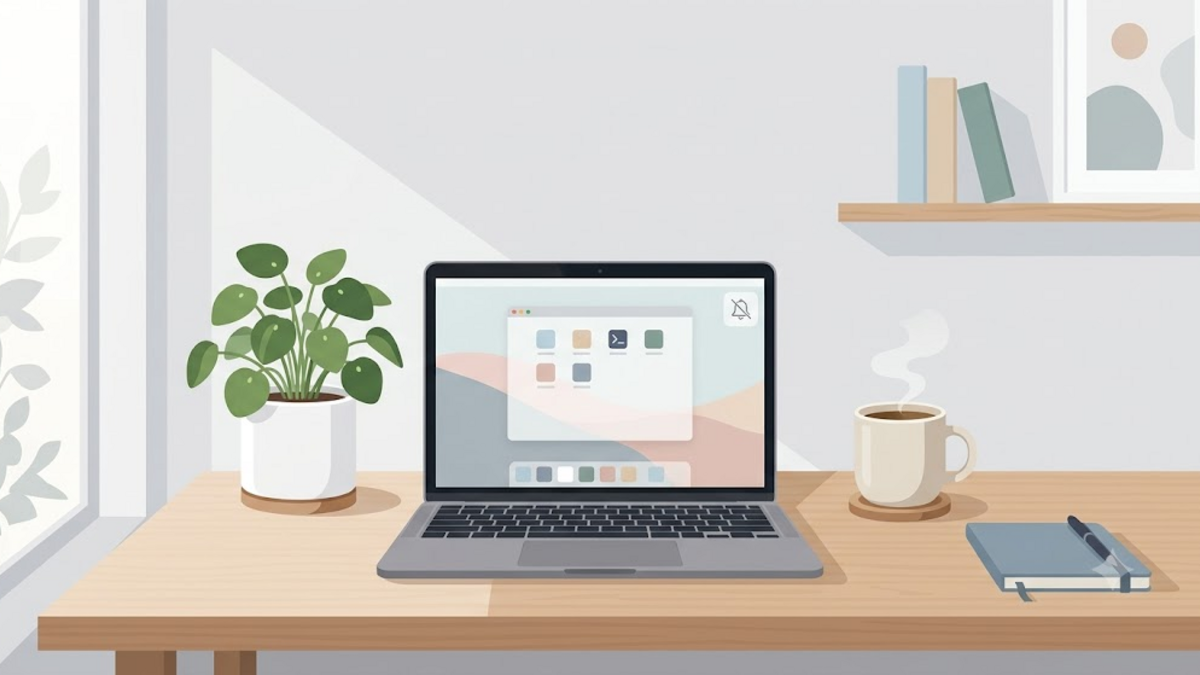
Digital Minimalism — Why Less Is More in a Noisy Information Age
That morning I opened my cell phone before I had time to brush my teeth. Forty-seven notifications await: three family groups, two mentions on Twitter, application updates, e-commerce promotions, news headlines that I can actually read later, and one email that turns out to be just a newsletter. I feel like I've worked hard, even though I've just woken up.
If your wardrobe is full of clothes but every morning you are still confused about which one to wear, maybe the problem is not a lack of choice, but rather an excess of choice. Likewise with our digital world today. We have so many applications, channels, information and notifications, that the technology that is supposed to make life easier actually steals our attention little by little. This is where digital minimalism comes in: not to stay away from technology, but to make technology work according to our wishes, not the other way around.
What is Digital Minimalism?
Cal Newport, professor of computer science and author, defines digital minimalism as "a philosophy of technology use in which you focus your online time on a small number of carefully selected and optimized activities that strongly support things you value, and then happily miss out on everything else." The translation is simple: use technology intentionally, choose a few activities that are truly important, and be willing to skip the rest.
Digital minimalism doesn't mean deleting all applications, or living like it's 1995. You can still have social media, streaming or games. What has changed is not the list of applications, but rather the intention behind their use. Every app should be able to answer the question: "What concrete value does this bring to my life?" If the answer is just "so you don't miss out" or "because everyone has it", then that's the first sign that you are being used by technology, not using it.
Why This Era Makes Us Excess
Human attention is a commodity. Every platform is competing to grab eyeballs and engagement. Infinite scroll, push notifications, autoplay, and red badges on app icons were all designed by engineers and psychologists to keep us coming back again and again. They don't necessarily have malicious intentions, but their business model depends on how long we stay.
Imagine yourself at an all-you-can-eat restaurant. Your plate can be filled as much as you like, but your stomach has limits. If you keep taking it because "it would be a shame if you didn't", in the end all you will have is nausea, not satisfaction. The digital world is similar: we pile on endless amounts of information, entertainment, and connections, then wonder why our brains feel heavy. The brain is not designed to process hundreds of updates every day. Overload is not wealth, it's hidden costs.
Signs You Need Digital Minimalism
There's no need to wait until burnout to start improving. Some common signals that I often miss myself:
- It's hard to focus for more than ten minutes. Reading technical articles feels like climbing a mountain because your mind keeps running to your cell phone.
- Phantom anxiety. Pocket is empty, but you still feel the notification vibration.
- Browser tabs are like a jungle. Fifty tabs open, but none of them are actually finished reading.
- Aimless scrolling. Open an app because you're bored for three seconds, close the app, then open it again.
- Life feels busy but empty. I'm online all day, but at night it's hard to name one meaningful thing that I've done.
If some of the points above feel familiar, don't panic. This means that you are human, and the system you use is designed to make you addicted. The good news: we can rebuild our relationship with technology from scratch.
Principles that can be immediately put into practice
1. Apply Default "No"
Consider every new app, every notification, and every subscription a potential distraction until proven otherwise. Don't just allow notification access. Don't click "subscribe" because of FOMO. Ask for a clear reason before something enters your day.
2. Ruthlessly Curate Feeds
You don't need to know everything that happens in the world. Unfollow accounts that only make you compare yourself. Get out of chat groups that are noisy but unproductive. Turn off autoplay on YouTube and Netflix. Healthy feeds do not occur naturally; it must be maintained.
3. Communication Batch
Reply to messages at certain times, not every time there is a notification. I usually use two or three time slots a day to check chat. Beyond that, the phone remains in Do Not Disturb mode. Important people can still contact you via telephone if there is a real emergency.
4. Reclaim Single-Tasking
Multitasking is a productivity myth. The brain cannot write code while checking Instagram effectively. What happens is just context switching which consumes energy. Do one thing, finish it, then move on.
5. Periodic Audit
Once a month, check the apps you open most often. On Android and iOS, Screen Time or Digital Wellbeing is available. Ask: “Is the time worth the value?” Otherwise, consider removing or limiting.
Digital Minimalism in My Home Server and Workflow
Since building my own home server, I have become more aware of this principle. Each installed service needs updates, memory, and attention. If you just install it, the server will gradually become a mess and actually add to the burden on your mind. The fewer moving parts, the easier it is to maintain.
I started implementing a simple policy: before adding a new service, first write down the reasons in a note. Is it really necessary? Is there an existing service that can handle that need? A similar technique can be used to clean old files on a computer. For example, audit files in the Downloads folder that have not been accessed for more than 90 days:
# Cek file di Downloads yang tidak dibuka lebih dari 90 hari
find ~/Downloads -type f -atime +90 -ls

# Hapus hanya setelah kamu yakin tidak dibutuhkan
find ~/Downloads -type f -atime +90 -delete
The little commandment above teaches a big thing: before cleaning, look at what you have first. Minimalism is not about deleting haphazardly, but making conscious decisions about what is worth keeping.
Consequences that Must Be Accepted
Choosing a simpler life digitally is not always popular. You might miss the latest memes, not immediately know the gossip in the group, or be considered "rarely online". Other people might be surprised. But it's worth the cost to regain attention and mental energy.
What I learned: we don't lose anything meaningful by not knowing every update. In contrast, we only have room for the things that really matter: reading that long-delayed book, finishing a personal project, talking face-to-face without a cell phone on the table, or simply not feeling rushed.
Conclusion: Empty Space Is Not Void
Digital minimalism does not make our lives empty. It empties out the unnecessary, so that the important can breathe. Just like cleaning out a work desk full of papers, we don't lose the desk; we're just rediscovering the surface to work on.
Start with small steps. Turn off one app's notifications. Delete one social media account that only stresses you out. Designate one hour every day without your cell phone. You don't need to be perfect; you just need to be more intentional. Because in a world that is constantly noisy, the most valuable ability you can have is attention that you control yourself.
Have you ever tried digital minimalism? Or do you find it difficult to get away from one particular application? Tell me in the comments column. I want to know your point of view.