
Digital Sabbath — Why I Deliberately Turn Off the Screen
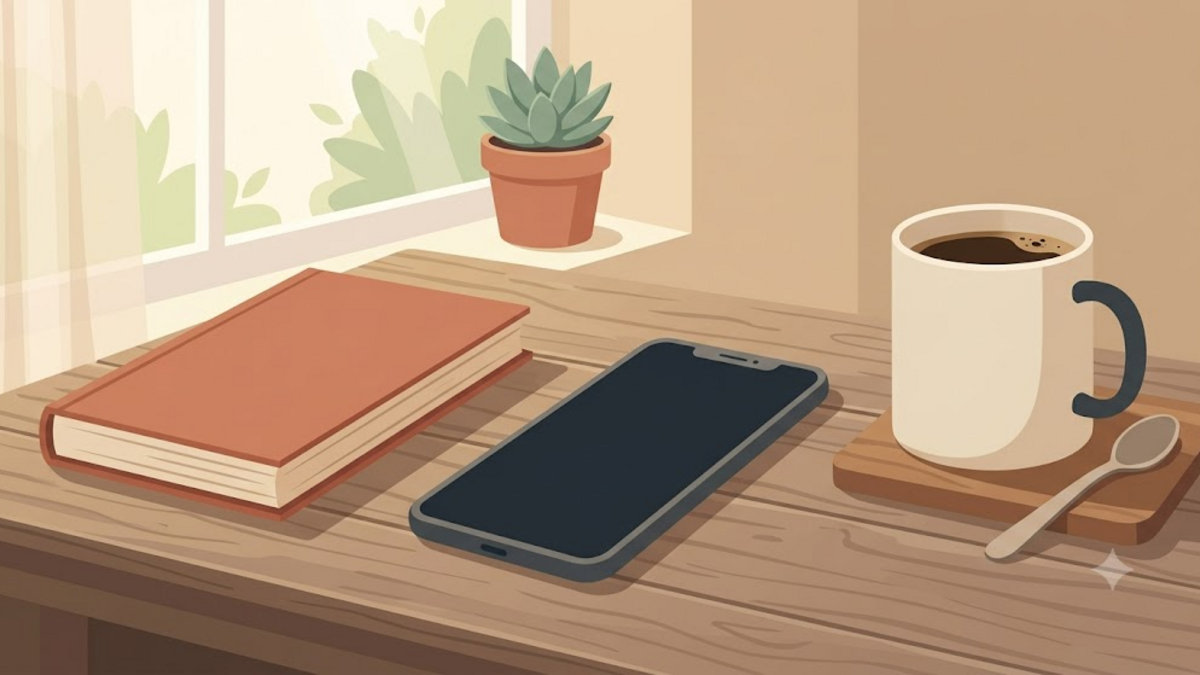
There is one moment that I often repeat without realizing it: opening my eyes in the morning, my hand immediately reached for my cell phone, and before my eyes had time to adjust to the light, they were invaded by notifications. Not because there was emergency news, just because the night before I fell asleep staring at the screen. I used to think it was productivity. Turns out it's a habit of leaving my morning to someone else's algorithm.
I started to wonder: if the body needs sleep, and the brain needs rest, then why are screens excluded? From there I became familiar with the term Digital Sabbath: one day a week where I deliberately turn off the screen, or at least reduce my presence in the digital world. Not because I hate technology, but because I want to love it again consciously.
What is Digital Sabbath?
Digital Sabbath originates from an older Sabbath concept: a day of rest that is not just about not working, but deliberately breaking the rhythm to remember what is truly important. In the digital version, we choose a period of time not to open email, social media, news or applications that attract constant attention.
Not a radical digital detox and only lasts three days. Digital Sabbath is more like making a promise to myself: today, I won't let the screen dictate my mood. It can be a full day, it can be a half day, it can start from Saturday evening to Sunday afternoon. What is important is not the duration that is the benchmark, but the awareness.
"A break from screens is not an escape from technology, but a way to not forget that we have a life beyond notifications."
Why Screens Need a Break Too
Imagine our brain like a kitchen. Every notification, every scroll, every incoming email is someone opening the kitchen door and asking, "Sorry, just a moment." If it happens once, it can still be tolerated. But if the kitchen door is open all the time, we never actually cook anything. We are only busy responding to guests.
That's what's happening with the attention economy: digital platforms are designed to grab our attention. They're not trying to be malicious, but they are optimized to keep us around. Without conscious boundaries, it's easy to feel "busy" when really we're just scattered. We read a lot, but feel empty. We connect with thousands of people, but are rarely truly present.
Digital Sabbath offers a space to close the kitchen door temporarily. Not so that we are anti-technology, but so that we have the opportunity to cook something meaningful: read a book without being distracted, talk to family without glancing at the cell phone, walk aimlessly while looking around, or just sit and think.
How I Got Started Without Being Radical
The first time I tried, I immediately failed. I said to myself, "This week without a cell phone at all!" Then I got frustrated because I needed to check messages from friends, needed to see the travel route, and finally gave up. Since then I've learned: Digital Sabbath doesn't have to be black and white. The important thing is to make clear and humane rules.
Here's the version I'm currently using:
- Choose a day and time: I start from Sunday morning to Sunday afternoon. The duration is long enough to be felt, but not so much that it interferes with urgent needs.
- Turn off non-essential notifications: I turn off social media, email and news. Phone calls and messages remain active because it is an emergency line.
- Set physical boundaries: Put your phone on another table, not in your pocket or on the bed. Physical distance helps reduce temptation.
- Prepare an alternative: Before the Sabbath begins, I prepare a book, an offline to-do list, or another activity plan. A blank screen with no alternatives will quickly lose out.
- It doesn't have to be perfect: If there's something important that requires a cellphone, I use it. The goal is not castle defense, but awareness.
On Linux, I even wrote a simple timer to turn off notifications for the duration of Digital Sabbath:
# systemd timer: mulai DND setiap Minggu pukul 00:00
[Unit]
Description=Digital Sabbath Do Not Disturb

[Service]
Type=oneshot
ExecStart=/usr/bin/gsettings set org.gnome.desktop.notifications show-banners false
ExecStop=/usr/bin/gsettings set org.gnome.desktop.notifications show-banners true

[Install]
WantedBy=timers.target
That's just a small example. The point is not where we turn off notifications, but where we decide not to be constantly available.
What I Feel After Trying
At first, Sunday morning felt strange. Like losing a joint that I often rely on. I feel like I'm running out of activities. But after a few hours, something started to change. My eyes feel more relaxed. My mind no longer jumps around. I started noticing things I'd normally miss: the sound of a bird near the window, the actual taste of coffee, the expression of the person I was talking to.
More than that, I realized that many things I considered "important" were actually just urgent, not important. Notifications make everything seem equally important. In fact, most of it will still be there tomorrow. Digital Sabbath helped me sort out again: which ones really need a response now, and which ones can wait.
"When the screen went off, I realized how many voices in my head weren't mine."
Digital Sabbath Is Not Anti-Technology
Some people think that Digital Sabbath means rejecting progress. No. I still love writing code, tinkering with servers, reading technical articles, and discussing in online communities. I even built my own home server and enjoyed the automation. But I also want technology to remain a tool, not a boss.
Like a bicycle: useful if we are the ones pedaling, but tiring if the bicycle is pulling us. Digital Sabbath is a moment to get off the bike, see the view, then get back on with a clearer direction.
Conclusion
Digital Sabbath does not require us to be perfect. He just reminds us that we have the right to rest from a world that is constantly moving. In an era where every app is trying to make us stay, choosing to leave temporarily is a small form of courage.
I don't promise that life will change drastically. But I promise you one thing: once you try turning off your screen for a few hours, you'll start to see how much of your time isn't really yours. From there, you can decide for yourself: do you want to continue lending it, or start taking it back?
How about you? Have you ever tried taking a break from screens? Tell me in the comments — I'd love to hear your experiences.