
NIST Cybersecurity Framework — A Practical Guide to Implementing 5 Key Functions for Small Organizations
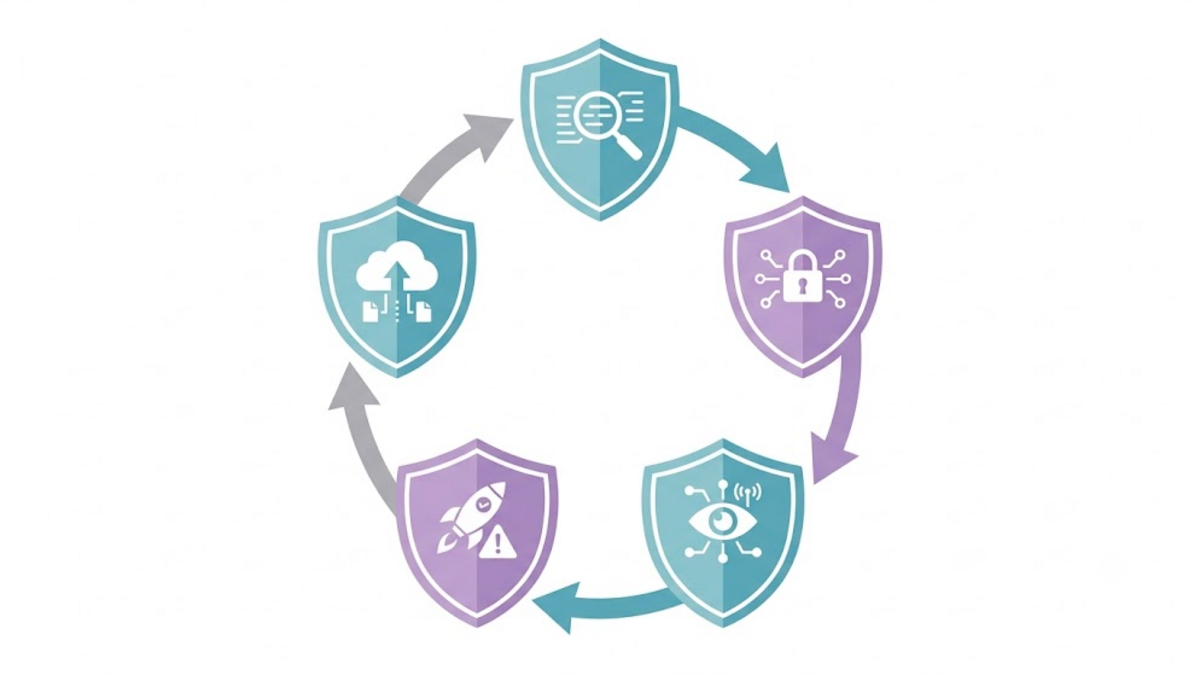
I still remember the first time I read the NIST Cybersecurity Framework document several years ago. The number of pages was enough to make my eyes water, especially at that time I was just starting to dive into the world of information security. It was like opening a treasure map without any directions: there were lots of terms, categories, and sub-categories, but I didn't know where to start. Over time I realized that this framework is not actually a thick book that must be memorized, but rather a compass — a compass that helps us see an organization's security condition more clearly.
NIST CSF was created by the United States National Institute of Standards and Technology. Even though it was originally intended for critical infrastructure, the structure is so flexible that it can be used by startups, small companies, communities, and even personal home servers. In essence, this framework helps us organize security activities into five broad functions: Identify, Protect, Detect, Respond, and Recover. These five words are often abbreviated to IPDRR, and I'll explain each one in a way that you can immediately apply.
Identify — Recognize Assets and Risks Before Acting
Imagine you are leaving home for a long holiday. The most sensible first step is not to install additional locks, but rather to take note of what is in the house: how many doors, how many windows, what electronic devices are left, and what valuables could be targeted. In cybersecurity, these activities are called asset management and risk assessment.
The Identify function requires us to understand the business environment, resources and inherent risks. Several things you need to do at this stage:
- Create a list of digital assets: servers, domains, databases, laptops, cloud accounts, code repositories, and sensitive data.
- Determine the roles and responsibilities of the team regarding information security.
- Identifies relevant threats: from phishing, ransomware, to lost devices.
- Understand the regulations or standards that apply in your industry, such as ISO 27001, PCI-DSS, or personal data regulations.
At home, I implemented Identify simply: a spreadsheet listing VPS, domains, running services, and accounts with root access. Without these notes, I would never know how many "doors" were actually open in my personal network.
Protect — Building a Strong Enough Defense
Once you know what to protect, the next step is to install protection. The Protect function does not mean creating an eternal anti-hacker system — nothing is completely immune. The goal is to reduce the likelihood of a successful attack and limit the impact if a breach occurs
Some practices that fall into the Protect category include:
- Access control: use the principles of least privilege, multi-factor authentication (MFA), and role-based access.
- Security awareness: train the team to recognize phishing and social engineering.
- Data security: encryption of data at rest (at rest) and in motion (in transit).
- Maintenance: patch the operating system, applications and libraries regularly.
- Perimetral protection: firewalls, WAFs, and network segmentation.
For a personal home server, I usually start with the basics: disabling unnecessary ports, using SSH key-based authentication, enabling fail2ban, and keeping the system and containers up to date. It's like making sure every window in the house is tightly closed and every lock is working properly.
Detect — Recognizing Strange Events Before They Become Disasters
A strong defense alone is not enough. A good guard not only locks the door, but also paysto attention to signs of disturbance: strange noises in the yard, flashing lights, or unusual footprints. In the cyber world, the Detect function acts as a "guard" that monitors suspicious activity.
Detect activities include:
- Install monitoring and logging: syslog, auditd, or tools such as Wazuh and CrowdSec.
- Create a normal baseline so that anomalies are more easily seen.
- Detect intrusion with IDS/IPS and endpoint detection.
- Periodically review access logs, errors, and configuration changes.
One small habit that helps is keeping logs longer than the default habit. Many systems set log rotation to only seven days, whereas often we only realize there is a problem after two weeks. Providing sufficient log storage space is a cheap investment for better awareness.
Respond — Act Quickly and Orderly During an Incident
When the detection sounds, panic is the biggest enemy. The Respond function emphasizes the importance of planning, coordination, and communication. Imagine a small fire in the kitchen: a panicked person will grab water carelessly, while a calm person knows where the fire extinguisher and evacuation routes are.
In the context of the NIST CSF, Respond includes:
- Develop a clear incident response plan, including who to contact and what the first steps will be.
- Analyze incidents to understand scope, attack vectors, and impacted data.
- Mush the impact with containment: disconnecting the network, disabling leaked accounts, or shutting down affected services.
- Remove the threat and restore the system carefully.
- Communicate with relevant parties: internal teams, customers, regulators or the public if necessary.
I usually recommend creating one simple document containing an emergency runbook: important contacts, how to access the server when the main is down, a safe backup of credentials, and first steps if there is any indication of ransomware. This document does not need to be expensive, but it is invaluable in times of crisis.
Recover — Returning to Operations Stronger
The last function is often overlooked, even though it actually determines how long a business or service can recover. Recover focuses on resilience and restoration: how we return systems, data, and reputation to normal conditions, then learn from these events.
Some important elements of Recover:
- Recovery planning: document procedures for restoring from backup, including RTO and RPO.
- Tested backup: not only make backups, but also try to restore them.
- Improvement: conducting post-incident reviews and updating policies.
- Communication: providing transparent information to users or customers.
The analogy is like a tree falling due to a storm. A tree that recovers is not only one that quickly re-establishes itself, but one whose roots grow stronger and branches neater after pruning. That's why every incident, no matter how bad, is an opportunity to strengthen our security foundations.
Simple Checklist Example to Get Started
To avoid getting bogged down in theory, here is a practical checklist that you can use as a starting point. You can save it in Markdown, spreadsheet, or even simple notes.
# NIST CSF Mini Checklist
# Salin ke file lokal dan tandai [x] saat sudah diterapkan.
[ ] Identify: Daftar seluruh aset digital (server, domain, akun, data).
[ ] Identify: Tentukan data paling sensitif dan dampak jika bocor.
[ ] Protect: Aktifkan MFA untuk semua akun admin dan kritis.
[ ] Protect: Terapkan SSH key-based auth dan matikan login password.
[ ] Protect: Patch OS, aplikasi, dan library minimal bulanan.
[ ] Detect: Pasang log monitoring dan atur retensi minimal 30 hari.
[ ] Detect: Buat alert untuk login gagal, perubahan file, dan anomali traffic.
[ ] Respond: Tulis runbook insiden dengan kontak darurat dan langkah pertama.
[ ] Respond: Latih tim untuk mengenali dan melaporkan insiden.
[ ] Recover: Buat backup otomatis dan lakukan restore test berkala.
[ ] Recover: Dokumentasikan RTO/RPO dan evaluasi pasca insiden.
This checklist is intentionally kept simple. You don't need to finish everything overnight. Choose three items that are most relevant to your current situation, then work on them this week. Information security is not a sprint; it's a marathon that is run little by little.
From Frameworks to Habits
The NIST Cybersecurity Framework does not promise perfect protection. What it offers is a common language and clear structure for managing risk. In practice, I look at the NIST CSF as a thinking aid: every time there's a security decision, I ask, "This goes to the Identify, Protect, Detect, Respond, or Recover function?" That simple question often makes the choice more focused.
For small organizations or individuals just starting out, don't let the official NIST documents intimidate you. Start with the five functions in everyday language: recognize, protect, monitor, treat, and recover. Once the habit is established, documentation and certification can follow naturally.
If you are interested in deepening this topic, please leave a comment below. I'd love to hear your experience implementing NIST CSF, or any other security framework you've used. Sometimes a small discussion actually opens up a point of view that you never thought of before. Let's learn together.