
The Cost of Convenience — What Frictionless Technology Quietly Takes Away
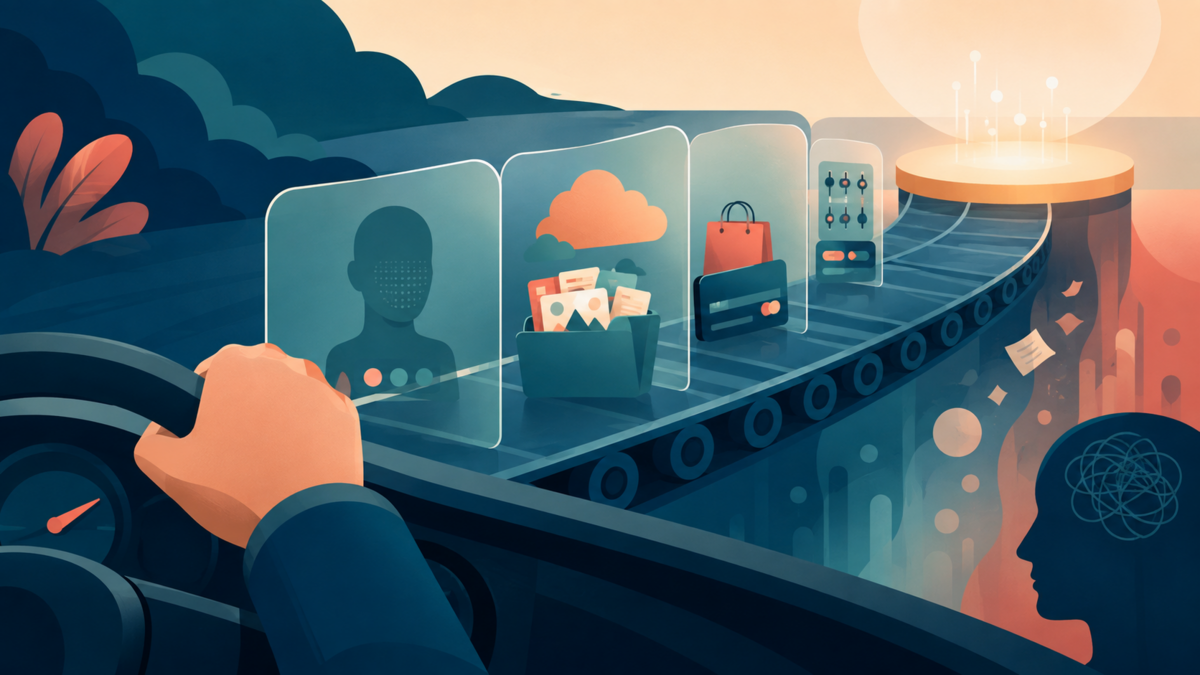
Convenience rarely looks dangerous. It appears as a button that saves three steps, an app that remembers our choice, or a subscription that quietly renews. I enjoy these comforts too, but I have started asking a less comfortable question: when technology removes every bit of friction, what else disappears with it?
This is not an argument for making software deliberately annoying or returning to paper maps for every journey. Good design should reduce pointless effort. The problem begins when convenience stops serving us and starts making decisions on our behalf. Like a moving walkway at an airport, it can help us travel farther with less fatigue; if we stay on it long enough, however, we may forget that we can choose another direction.
Friction Is Not Always a Design Failure
In product design, friction usually means anything that slows a user down: an extra confirmation, a password prompt, a manual setting, or a moment spent comparing options. Removing unnecessary friction is often valuable. A clear checkout form is better than a confusing one, and automatic security updates are usually safer than expecting everyone to patch a device by hand.
Yet some friction has a purpose. A confirmation before deleting a database protects us from a permanent mistake. Two-factor authentication adds a small delay because identity deserves more care than opening a weather app. A cooling-off period before a financial transaction gives emotion time to settle. These pauses resemble a speed bump near a school: the obstacle is not evidence of a badly designed road. It is there because moving at maximum speed is not always the wisest goal.
When every pause is treated as an enemy, we optimize only for completion. We stop asking whether the action should happen, who benefits from it, and what it will cost later. The shortest path through an interface can also be the shortest path around reflection.
The Quiet Exchange Behind One-Tap Experiences
A frictionless service still has a cost, even when no invoice appears. A recommendation feed needs behavioral data to predict what will keep us watching. Cloud synchronization needs our files to live on someone else's infrastructure. A voice assistant needs to remain available, listening for its trigger. One-click purchasing works because payment details, addresses, preferences, and past behavior have already been stored.
None of these exchanges is automatically wrong. The issue is that the exchange is often invisible at the exact moment we enjoy the benefit. We feel the saved seconds immediately, while the loss of privacy, portability, or bargaining power arrives slowly. It is similar to using a hotel minibar: the drink is within arm's reach, while the real price is hidden in a document we will see later.
Convenience can also turn ownership into access. Music, books, software, smart-home devices, and even vehicle features may keep working only while an account, server, vendor, or subscription remains available. The experience feels effortless on an ordinary day. Its dependencies become visible only during an outage, a policy change, a price increase, or a company shutdown.
Automation Can Save Time and Weaken Understanding
Automation is one of computing's greatest strengths. I would rather schedule a reliable backup than depend on remembering it every evening. But automation has two very different forms: one removes repetition while keeping us informed, and the other hides the process until we no longer understand it.
Consider navigation. Turn-by-turn directions reduce the mental work of reaching a destination, but following them exclusively can prevent us from building a map in our head. The same thing happens in technical systems. A managed platform may deploy an application in seconds, yet a team can become unable to explain where logs live, how certificates renew, or how data can be restored outside that platform.
The answer is not to reject automation. It is to keep a usable mental model. We should know what triggers the process, where the result goes, how failure is reported, and how to take over manually. An automatic backup without a tested restore procedure is not resilience; it is reassurance wearing a technical costume.
Convenience Concentrates Power
Every default setting is a small decision made in advance. When millions of people accept the same defaults, those decisions become power. A platform can decide which posts are visible, which file format is easy to export, which browser features are permitted, or which payment methods remain available. Users may technically have a choice, but the convenient path is highlighted while alternatives are buried behind menus, warnings, or incompatible formats.
This is why interoperability and open standards matter philosophically, not only technically. An export button, a documented API, or support for a common file format preserves the possibility of leaving. A door is meaningful not because we plan to walk through it every morning, but because the room is different when the door cannot be locked from outside.
Self-hosting offers one response, but it is not a moral requirement for everyone. Running every service personally has real costs in time, energy, security, and maintenance. The more important principle is proportional control: the more essential the data or function, the more important it is to have an exit plan, a local copy, and an alternative that does not depend on one vendor.
A Practical Friction Audit
We do not need to abandon useful tools to regain agency. We can begin by examining one digital routine at a time. I call this a friction audit: identify what a convenience removes, then identify what it quietly requires. The following questions work for a cloud service, an AI assistant, a smart device, or an automated home server:
1. What effort does this tool save?
2. What data, money, skill, or control do I exchange for it?
3. What happens when the internet, account, or vendor disappears?
4. Can I export my data in a useful, open format?
5. Is there a manual recovery path that I have actually tested?
The goal is not to produce a dramatic score. It is to make hidden dependencies visible. A streaming subscription may remain a sensible choice after the audit. So may a cloud photo library. But we might decide to keep original photos on a local drive, enable an independent backup, or download purchases that matter deeply to us.
For technical automation, the audit can become concrete. Document scheduled jobs, inspect them periodically, and make failure noisy. Keep recovery instructions near the backup rather than inside the system that might fail. Test an export before trusting the export button. Small acts of verification add useful friction at the point where confidence could otherwise become complacency.
Choose Deliberate Friction, Not Maximum Friction
There is a temptation to turn this idea into purity: use no cloud, reject recommendations, disable automation, and maintain everything by hand. That replaces one loss of freedom with a mountain of chores. Time is also part of autonomy. A reliable tool can create space for family, learning, rest, or creative work.
The better question is where friction belongs. Let software remove repetitive typing, but keep a confirmation for destructive actions. Let a password manager generate credentials, but preserve an offline recovery kit. Let photos synchronize automatically, but maintain an independent copy. Let an algorithm suggest what to watch, but occasionally choose from a list made by a person we trust.
Useful friction is intentional, limited, and valuable. It creates a moment to notice, verify, or choose. Pointless friction consumes attention. Mature technology should know the difference.
Designing Convenience That Respects People
Developers and product owners can build convenience without turning users into passengers. Defaults should be safe, but reversible. Consent should be understandable rather than hidden in a maze. Data export should produce usable files. Automation should expose status, history, and errors. Destructive operations should slow down at the right moment, while ordinary tasks should remain smooth.
Most importantly, a product should degrade honestly. If a network connection is lost, it should explain what remains available. If a subscription ends, users should know what happens to their data. If an AI feature makes a decision, people should be able to review or override it. Respect appears not only in what software can do, but in how gracefully it returns control.
Conclusion: Keep the Steering Wheel
Convenience is not the opposite of freedom. It becomes a threat only when saved effort is purchased with dependencies we cannot see, choices we cannot reverse, or skills we are no longer allowed to use. The aim is not to place obstacles everywhere. It is to preserve the pauses that protect judgment and remove the obstacles that waste human energy.
The next time an app promises a completely frictionless experience, I will still be interested. I will also ask who stores the data, how I can leave, what happens when it fails, and whether I remain the person holding the steering wheel. If this reflection reminds you of a convenience you have reconsidered, share the story in the comments. It may help another reader notice a trade they did not know they were making.