
Vendor Risk Management for Small Organizations — Safeguarding Risks Coming from Third Parties
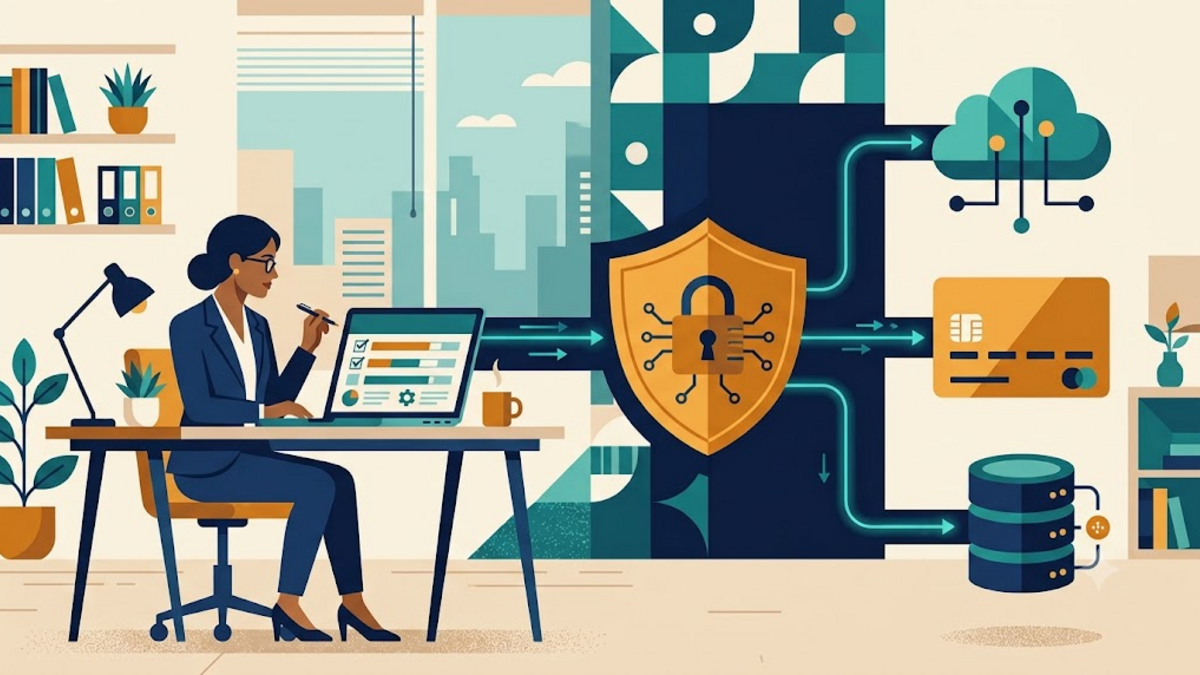
Vendor Risk Management for Small Organizations — Safeguarding Risks Coming from Third Parties
When building a system, our attention is usually focused on the server itself: admin passwords, application updates, backups, and firewalls. But a service rarely stands alone. There are email providers, payment gateways, cloud storage, accounting services, domain registrars, and attendance applications, all of which play a part in our workflow. At that point, the security of the organization also depends on third parties.
I've seen this situation like entrusting the house keys to several people because each of them helps with different matters. Some hold the keys to watering the plants, some fix the electricity, and some deliver packages. Everyone can be trusted, but you still need to know who has the keys, for what, and what to do if one key is lost. That's what vendor risk management is all about, without having to make it feel like a big corporate project.
Vendor risk is not just about data leaks
Vendors are external parties who provide products or services to an organization. Risks arise when vendors gain access to critical data, systems, or processes. A data leak is the easiest example to imagine, but the impact can be much broader: service stops because a SaaS account is locked, fake invoices are sent from a hacked vendor's email, or customer data is difficult to move when a service provider suddenly closes.
Small organizations are often more vulnerable because purchasing decisions are made quickly. There is a cheap offer, the team immediately creates an account using a personal email, then the application secretly becomes a place to store operational data. Six months later, no one knows who owns the account, what plan they are on, or whether data can be deleted when the subscription ends.
The goal is not to suspect all vendors. The goal is to make decisions with sufficient information. Even good vendors usually don't mind being asked about security, privacy, data location, and how they handle incidents.
Start with a simple inventory
The most useful step is to create a list of all active vendors. There is no need to immediately purchase a GRC application or prepare tens of pages of forms. A consistently maintained spreadsheet is enough of a foundation. Have finance, operations, and technical fill it out because the vendor list is almost always larger than one person can remember.
The minimum columns that I recommend are vendor name, services used, internal owner, type of data processed, access to the system, contract renewal date, and risk level. Also include a link to the contract or Data Processing Agreement if any. Internal owners are important: every service should have a person in charge, not just an inherited account.
Vendor: ExampleMail
This list is also helpful when someone leaves the team or when subscription costs need to be reviewed. Security and operational neatness often meet in the same place.
How to assess risk without making it complicated
For small organizations, use two main questions: how big of an impact would it be if a vendor had a problem, and how likely the problem would be to occur. The impact increases when the vendor stores personal data, can modify production systems, or is the only critical service line. The likelihood increases if the vendor does not explain its security practices, does not support multi-factor authentication, or its contract does not explain incident handling.
So that the assessment is not just based on feelings, give a score of 1 to 3 on several factors. The following is an example of a matrix that is light, but still provides direction for priorities.
Factor 1: Low 2: Medium 3: High Data Public data Internal data Private or confidential data Access No system access Restricted accounts Admin or production API Availability Easy to replace Disrupts operation Stops key services Vendor control Clear documentation Partially clear Cannot be proven
Add up the scores. Vendors with high scores do not automatically have to be rejected. They need deeper examination and additional control. For example, a payment gateway is certainly of high value because it handles transactions, but the risk is acceptable if the vendor has a good reputation, clear contracts, and integration is limited to needs.
Questions worth asking before purchasing
Don't get hung up on expensive certifications as the only indicator. ISO 27001 or SOC 2 gives a positive signal, but the absence of a certificate does not necessarily mean a bad vendor, especially for small local providers. What is more important is an answer that is concrete and aligned with the risks of our use.
- In which countries or regions is our data stored, and who can access it?
- Is data encrypted when sent and when stored?
- Does the account support multi-factor authentication, role-based access, and audit logs?
- How does the vendor notify customers if a security incident occurs?
- How long is data stored after an account is closed, and what is the deletion process?
- Are there backups, recovery targets, and a way to export data if the service is stopped?
For services that access infrastructure, add questions about technical access. Ask vendors to use personal accounts, not a shared account. Limit access with the principle of least privilege, use temporary access whenever possible, and revoke access after work is complete. API keys should be stored in a secret manager or environment variable, not sent via chat.
Incorporate control into work habits
Vendor risk management will fail if it is just a spreadsheet that is opened during an audit. Create small, repeatable processes. Before a new vendor is hired, the internal owner fills out inventory and answers basic questions. For medium or high risk vendors, the technical person and data person are involved in the review. Once approved, save the contract, set access, and note the next review date.
Annual reviews are often sufficient for low risk vendors. For critical vendors, do so every six months or when there is a major change: a new integration, data movement, change in vendor ownership, or news of a security incident. Also check whether the account you are no longer using is still active and whether the fees and access are still reasonable.
Exit plans need to be thought out from the start. This is not a pessimistic attitude, but rather like bringing an umbrella before leaving. Make sure data can be exported in a useful format, there are copies of critical configurations, and the team knows alternatives in the event of a lengthy vendor outage. A dependency that is recognized is easier to manage than a dependency that only becomes apparent during an emergency.
Conclusion
Organizational security doesn't stop at the server's door. Each vendor brings new capabilities as well as new risk pathways. With a clear inventory, simple assessments, the right questions, and regular reviews, small organizations can make big strides without excessive bureaucracy.
Start with the five most important vendors this week. Find out who the owners are, what data they hold, and how we can log out if necessary. If you have practical ways to assess vendors in your own team, share them in the comments column so we can learn from real experience.