
When All the Choices Feel Wrong — Kierkegaard, Absurdity, and the Leap of Faith
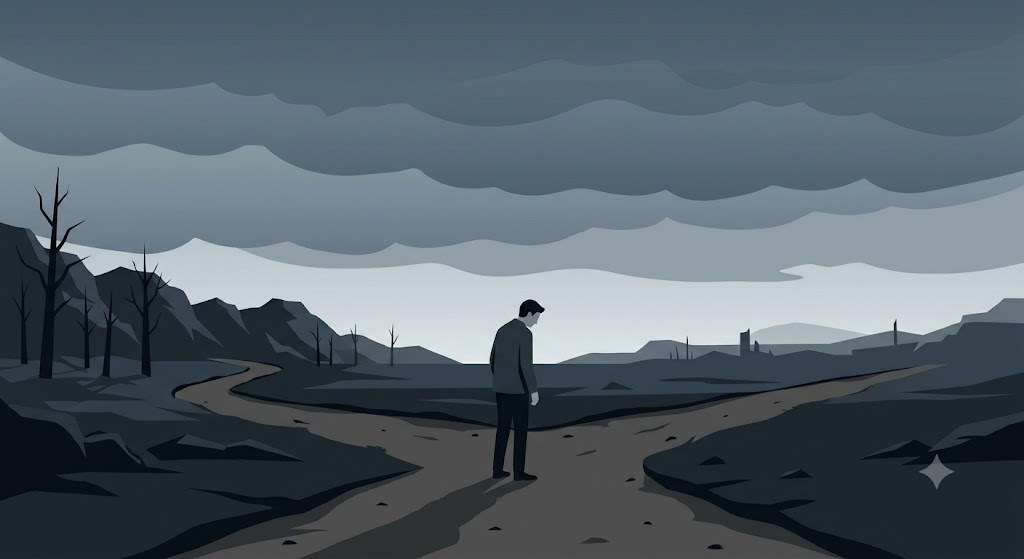
Have you ever stood at a crossroads in life and felt like there was no way out? Not because there are too many choices — but because all the choices feel wrong. That's the moment Danish philosopher Søren Kierkegaard called the dizziness of freedom — drunkenness with freedom.
Kierkegaard taught us that when you are faced with a situation where there is no right answer, it is not the end of the world. That's precisely where we find the true meaning of human existence.
What is Meant by "No Correct Choice"?
In Kierkegaard's philosophy, human life is a series of decisions made without absolute certainty. We may be caught between two unsatisfying jobs, equally destructive relationships, or dreams that seem impossible but also impossible to let go of.
Kierkegaard does not offer easy answers. Rather, he points out that it is these conditions that make us humans, not just beings who go through life automatically.
The Absurd — Life Without Innate Meaning
Before Kierkegaard, many philosophers believed the world had an innate meaning that we could discover if we were smart enough. Kierkegaard rejected that idea.
For Kierkegaard, life is essentially absurd. The world doesn't give us a guidebook. No GPS for a soul. You won't get an email confirmation saying "you have chosen the right path." None.
This absurdity is what makes us often feel like all choices are wrong. Because actually, nothing is objectively true. No choice can be guaranteed to be one hundred percent correct. All our decisions are made in the dark, without absolute confirmation.
Despair — When Everything Feels Heavy
Kierkegaard also wrote about despair — the spiritual condition when we feel empty, even though from the outside our life seems fine. When we struggle to choose and don't find a satisfactory answer, despair can come. But this is not the end.
Despair is a sign that we are looking for deeper meaning. If you feel anxious about choices that none of them seem right, it means you are at the crossroads between a shallow life and a meaningful life. Don't run from it. Face it.
Leap of Faith — The Solution When All the Choices Are Wrong
If nothing is right, what should be done? Kierkegaard offers the concept of Leap of Faith — a leap of faith.
Leap of Faith does not mean jumping blindly without thinking. Rather, it is a leap made with full awareness that we can never be one hundred percent sure, but still choose to believe.
Imagine you are standing on the edge of a dark cliff. On the other side there is light, but you don't know if it will take your life or take you to a better place. Leap of Faith is choosing to leap — not because you believe, but because you decide to believe.
In the context of life choices that all feel wrong, leap of faith means:
- Choose a job that is less prestigious but more meaningful to you
- Cutting off toxic relationships even though loneliness is coming
- Taking risks for a dream even though there is no guarantee of success
Not because you know it's true. But because you decided to live with that decision.
Conclusion
Kierkegaard teaches us that feelings of confusion, anxiety and uncertainty are an inseparable part of human life. When all the choices feel wrong, it's not a sign that you're going in the wrong direction. That's a sign that you're alive.
Kierkegaard's only answer to the condition of "nothing is true" is the courage to make a leap of faith — choosing to believe in something that cannot be guaranteed, but moving forward anyway.
Because in the end, as Kierkegaard himself said: Life is not a problem to be solved, but a reality to be experienced.